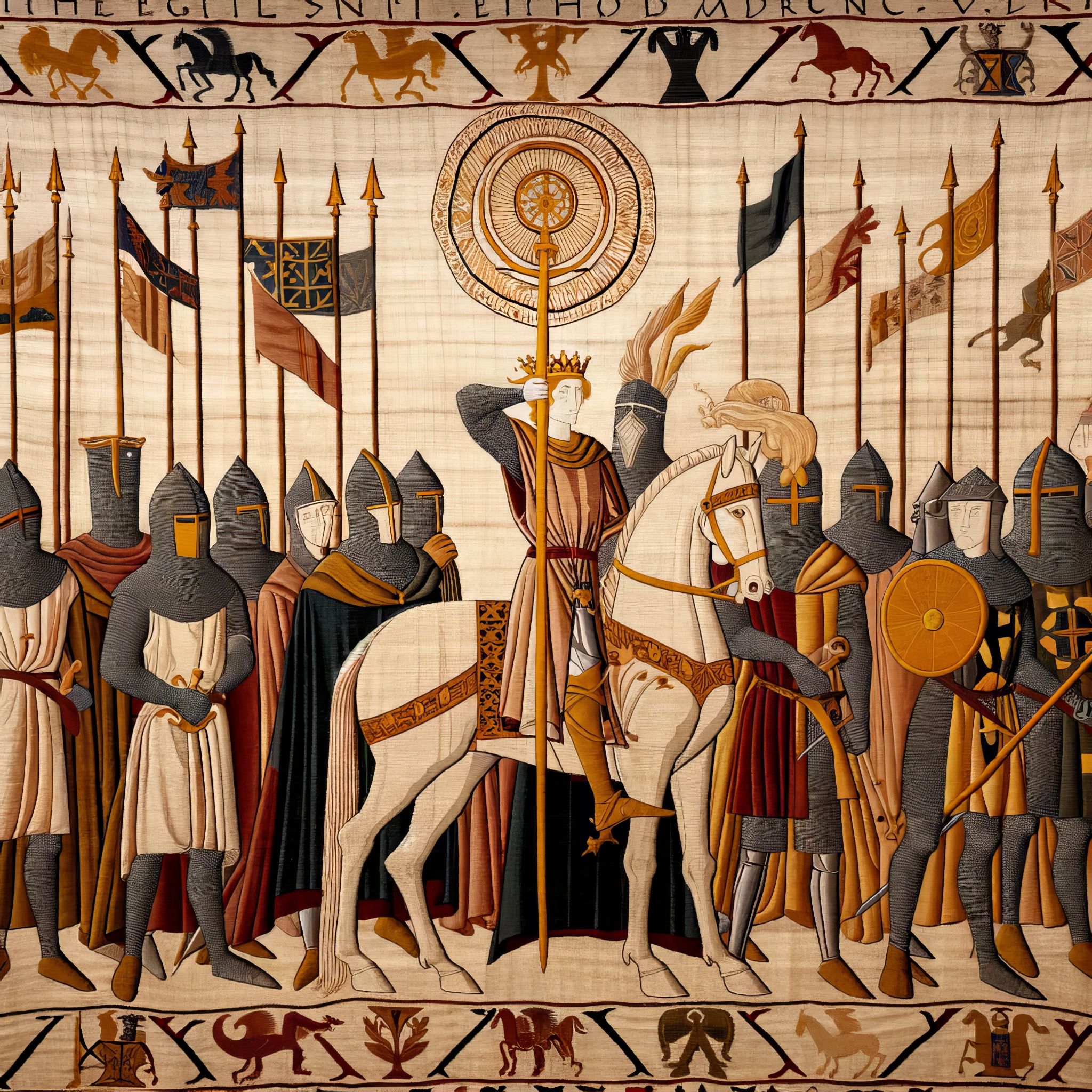
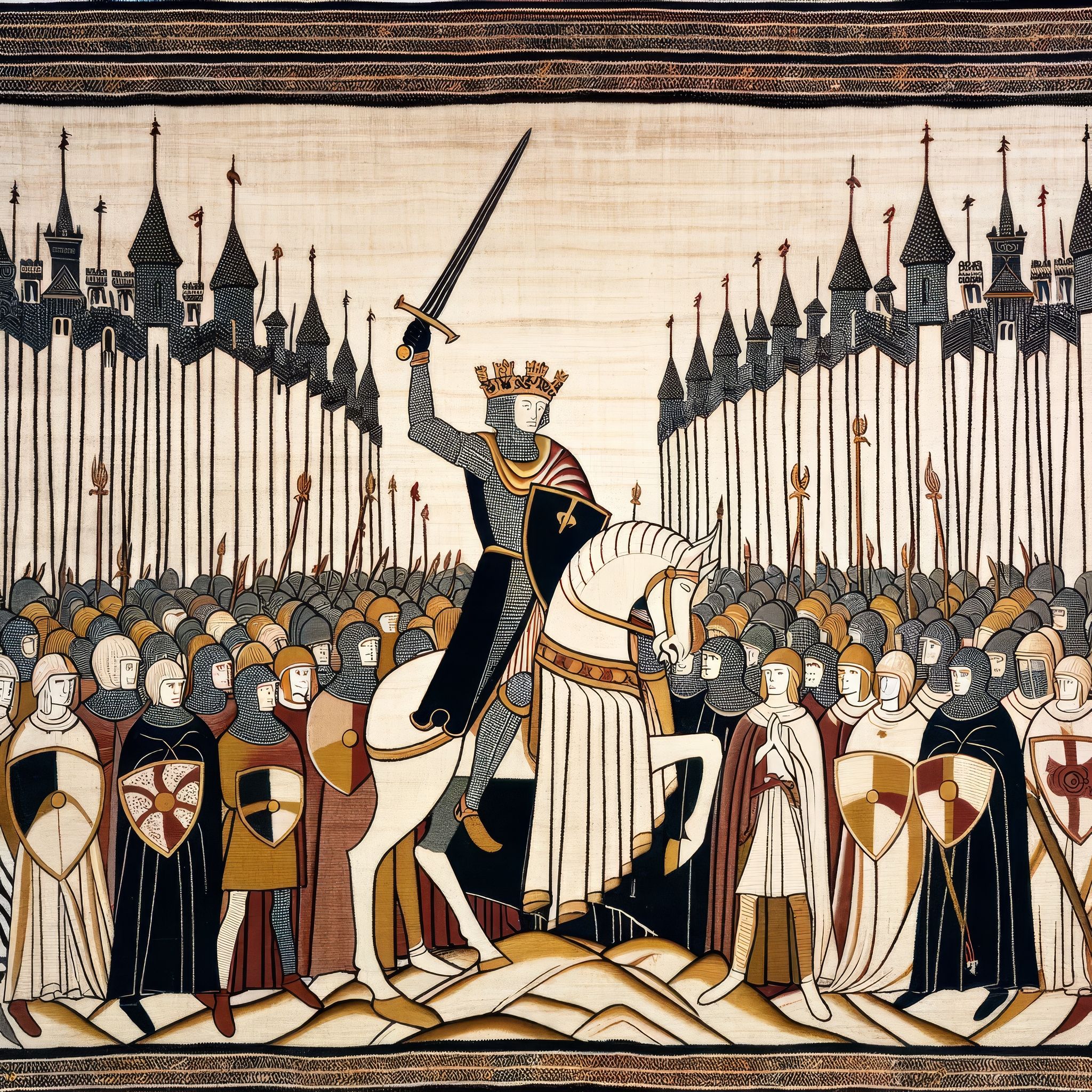
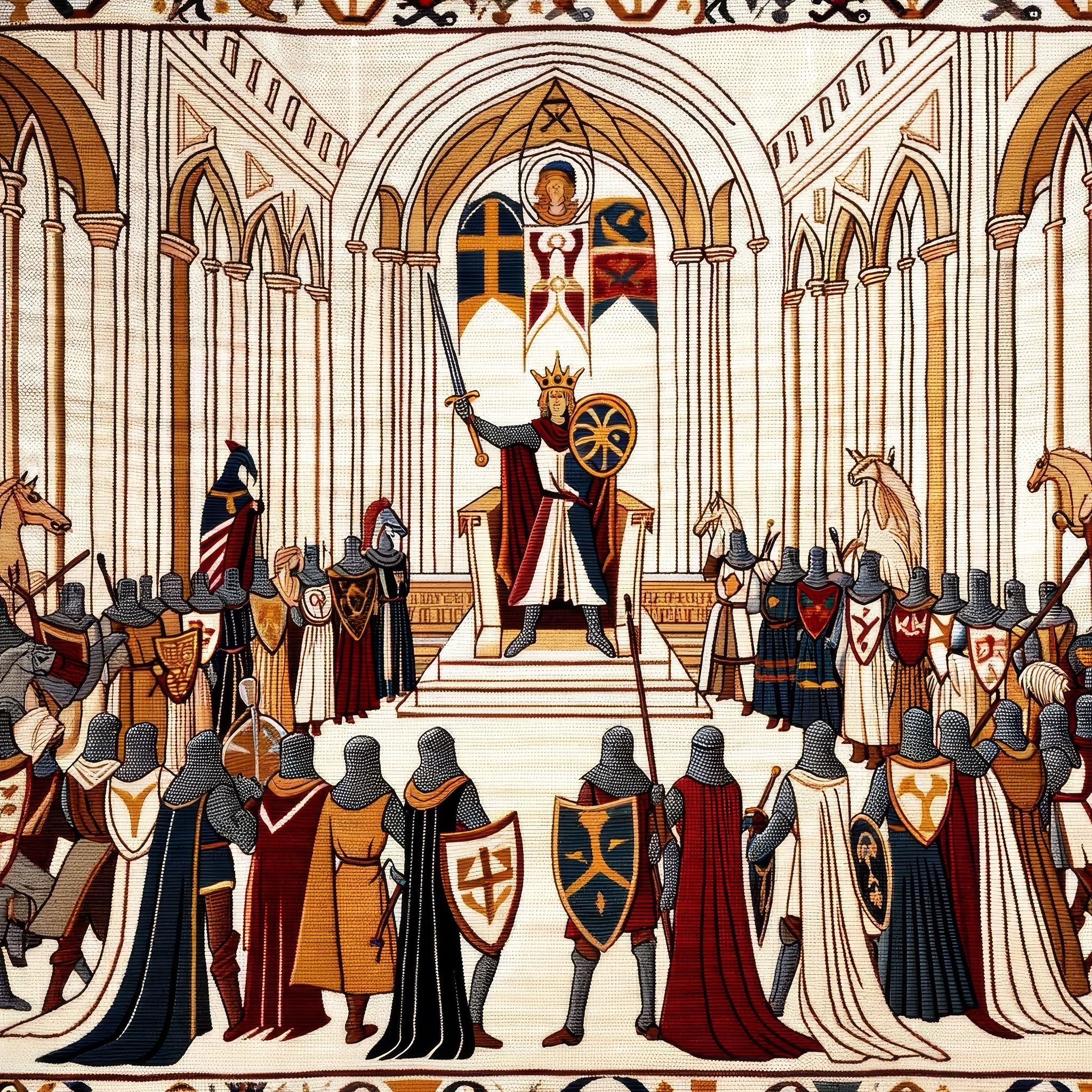
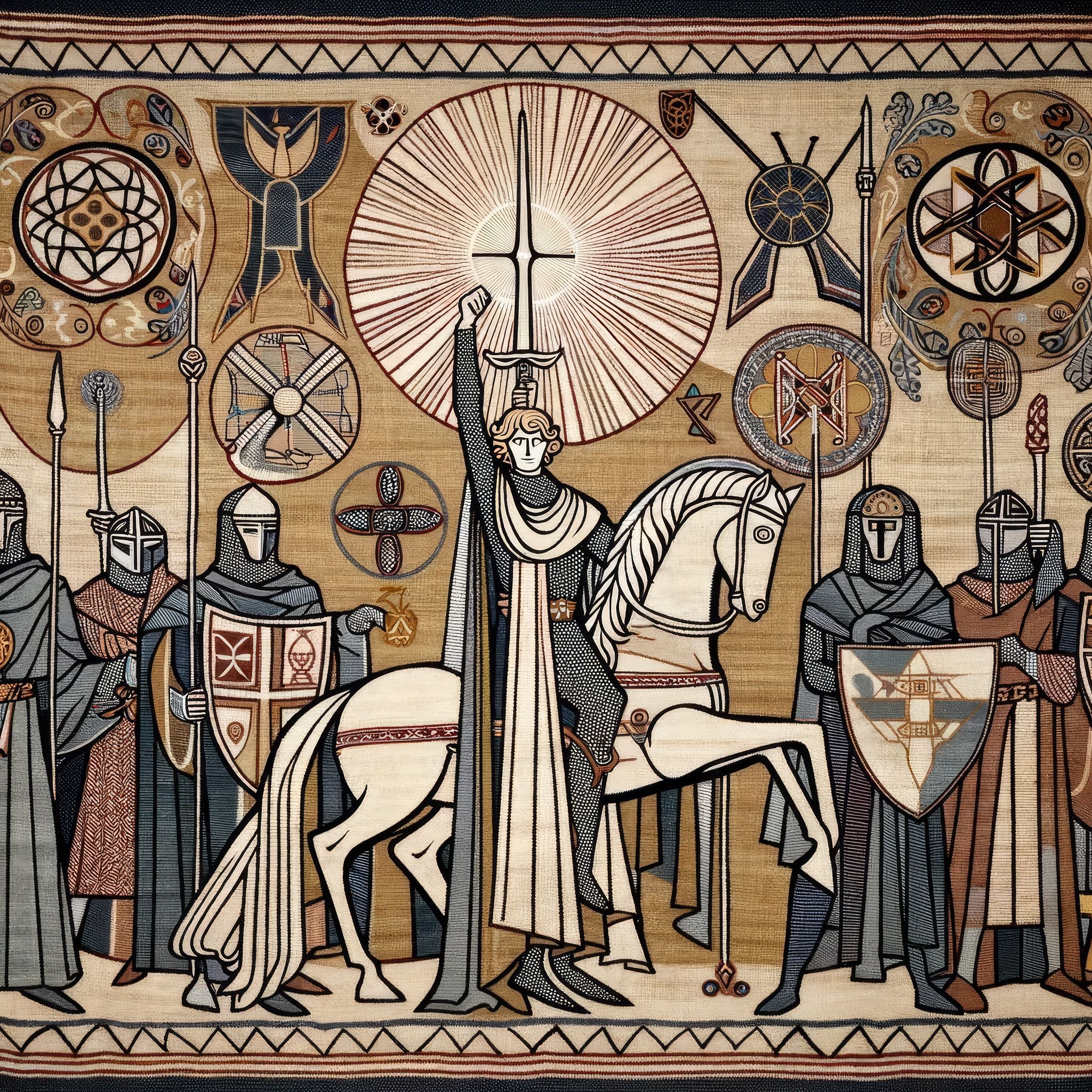
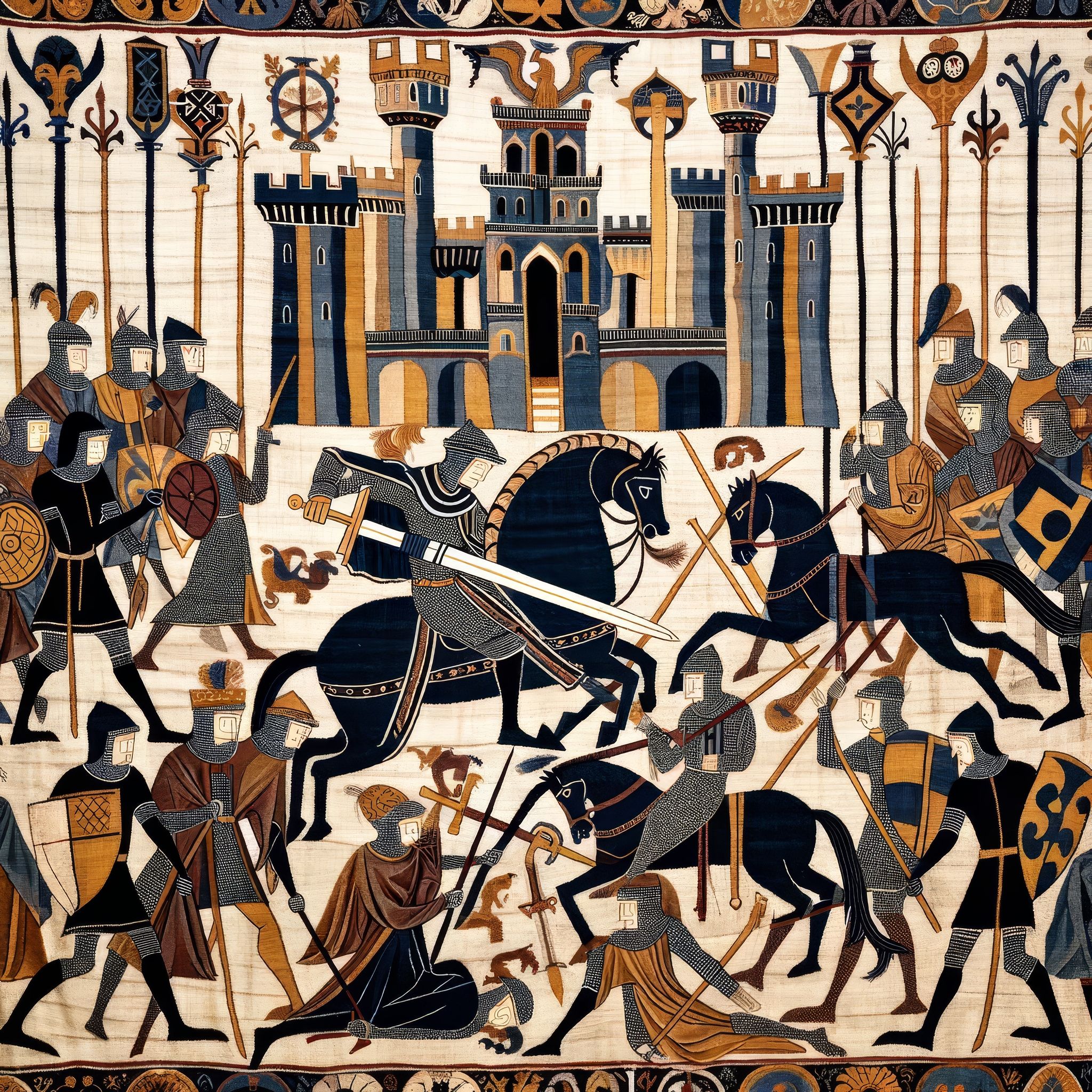
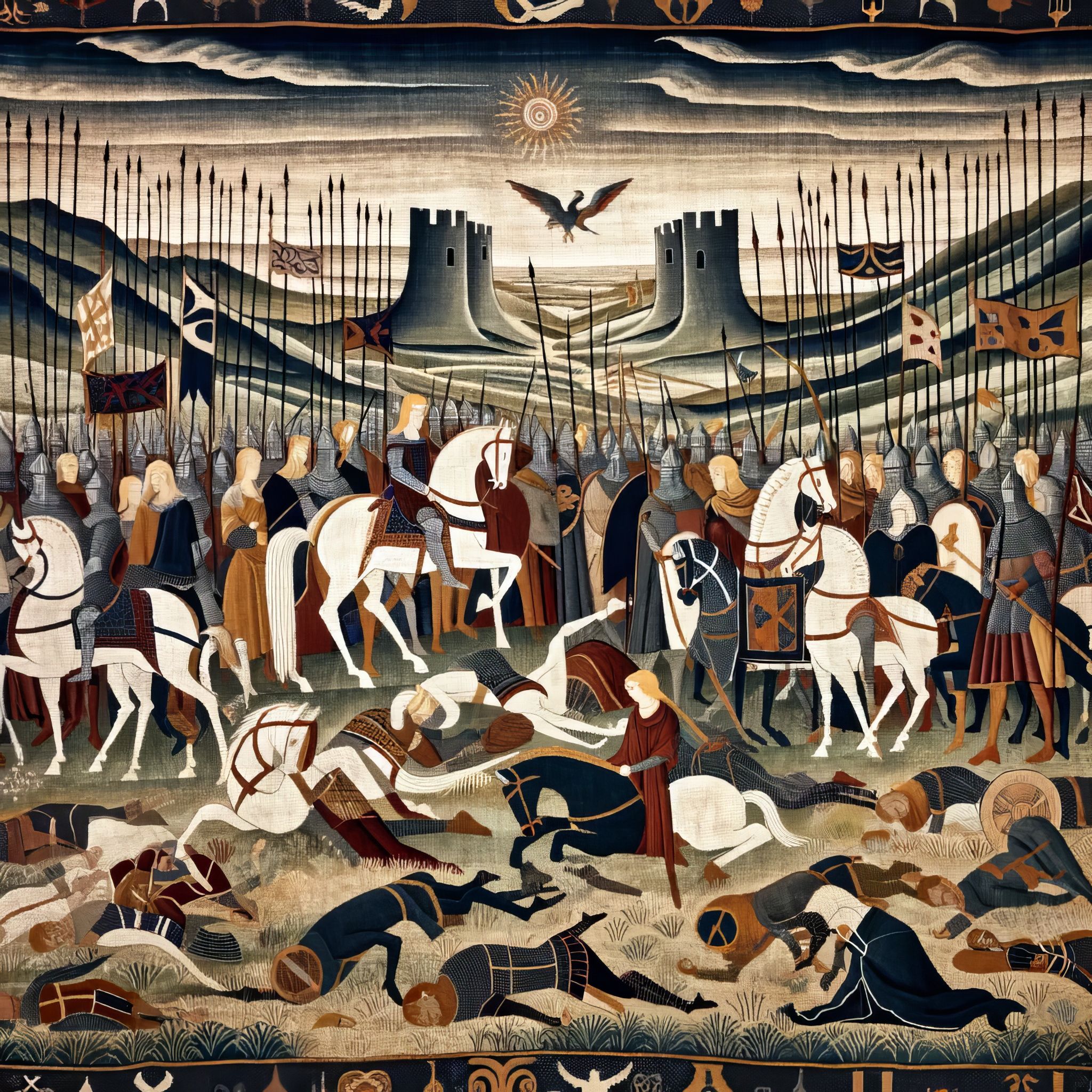
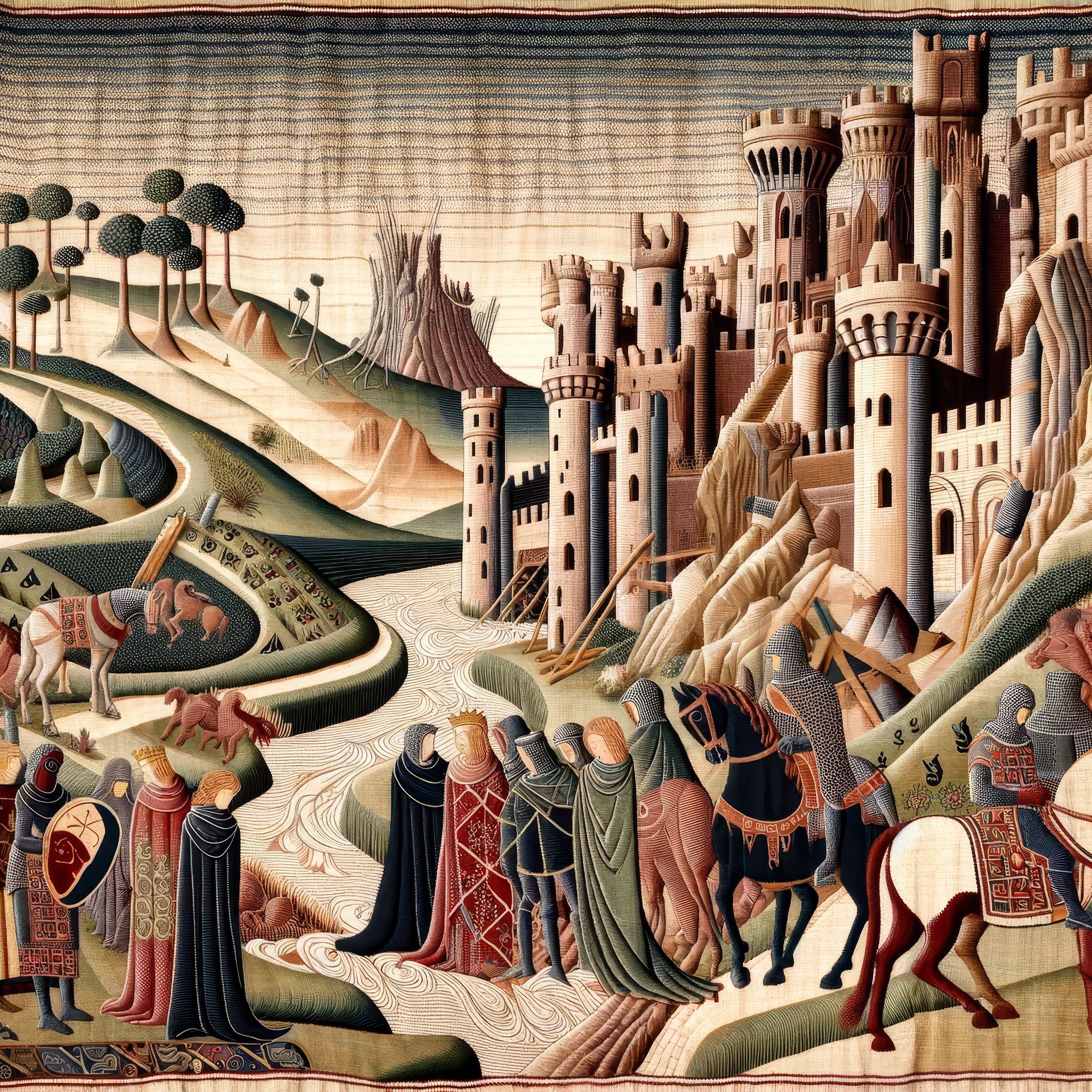
In the tapestry of tales that doth weave the fabric of legend and lore, none shines as bright nor dark as the saga of Camelot’s stand. This bastion of knightly virtue and beacon of the light of learning faced the shadow of its gravest trial when a vast host of Saxon marauders beset its walls. Yet, in this hour of dire peril, Arthur Pendragon, sovereign of the realm, and his fellowship of gallant knights held fast, their spirits steeled by the might of enchanted relics and the unyielding bonds of fraternity.
As the first light of dawn pierced the mists that lay heavy upon the lands encircling Camelot, the stillness was rent by the dread clamor of war. A multitude of Saxon invaders, their hearts set upon the ruination of this citadel of enlightenment, advanced with grim resolve. Their numbers, vast as the dark waves of a stormy sea, sought to engulf the bastion of chivalry. Yet, unbeknownst to these fierce assailants, they would soon meet a resistance wrought of valor and sorcery.
King Arthur, undismayed by the formidable tide arrayed against him, summoned his knights unto him. Gathered at the Round Table, emblem of their unbroken unity and equity, they prepared to defy the besiegers. Amongst their ranks stood figures of myth: Sir Lancelot, unmatched in martial skill and tormented by secret woes; Sir Gawain, paragon of the chivalric virtues; and Merlin, the wise, whose arcane mastery had long shielded the realm from peril.
Not with mere iron and steel were the defenders of Camelot arrayed, but also with relics of ancient potency. Foremost amongst these was Excalibur, the fabled blade given unto Arthur by the Lady of the Lake. Its edge, ensorcelled and gleaming with a light not of this world, kindled hope in the hearts of the beleaguered. Merlin, too, wielded powers of old, conjuring spells to fortify the fortress against the inexorable onslaught.
The siege of Camelot unfolded as a grim ballet of battle, enduring through days and nights without respite. The air was thick with the clash of armaments, the lamentations of the fallen, and the chants of eldritch magic. The Saxons, though fierce and innumerable, were time and again repulsed by the courage of the knights and the mystic forces at their command. Each new assault, however savage, was thwarted, the dreams of conquest of the invaders shattered against the indomitable will of Arthur and his warriors.
Thus was the downfall of Camelot averted, not solely by the strength of arms but through the fellowship and bravery of its defenders, guided by Merlin’s sagacity and Arthur’s legendary leadership. The Saxons, their spirits crushed and their ranks decimated, withdrew into the mists from whence they came, leaving behind a legend of resilience that would echo down through the ages.
Yet, victory was tinged with the bitterness of sacrifice. The siege had exacted its toll, leaving scars upon both land and people. Camelot had withstood the tempest, but in the aftermath of battle, the seeds of its eventual decline were sown. The chronicle of the fall of Camelot stands as a testament to the undying allure of myth and legend, a narrative steeped in heroism, sacrifice, and the perennial battle twixt light and shadow. It serves as a beacon, reminding us that even in the darkest of times, the light of unity and valor can pierce the gloom, leading the way to triumph.



Sign up for our newsletter to see new articles.

Subscribe to my weekly newsletter. I don’t send any spam email ever!