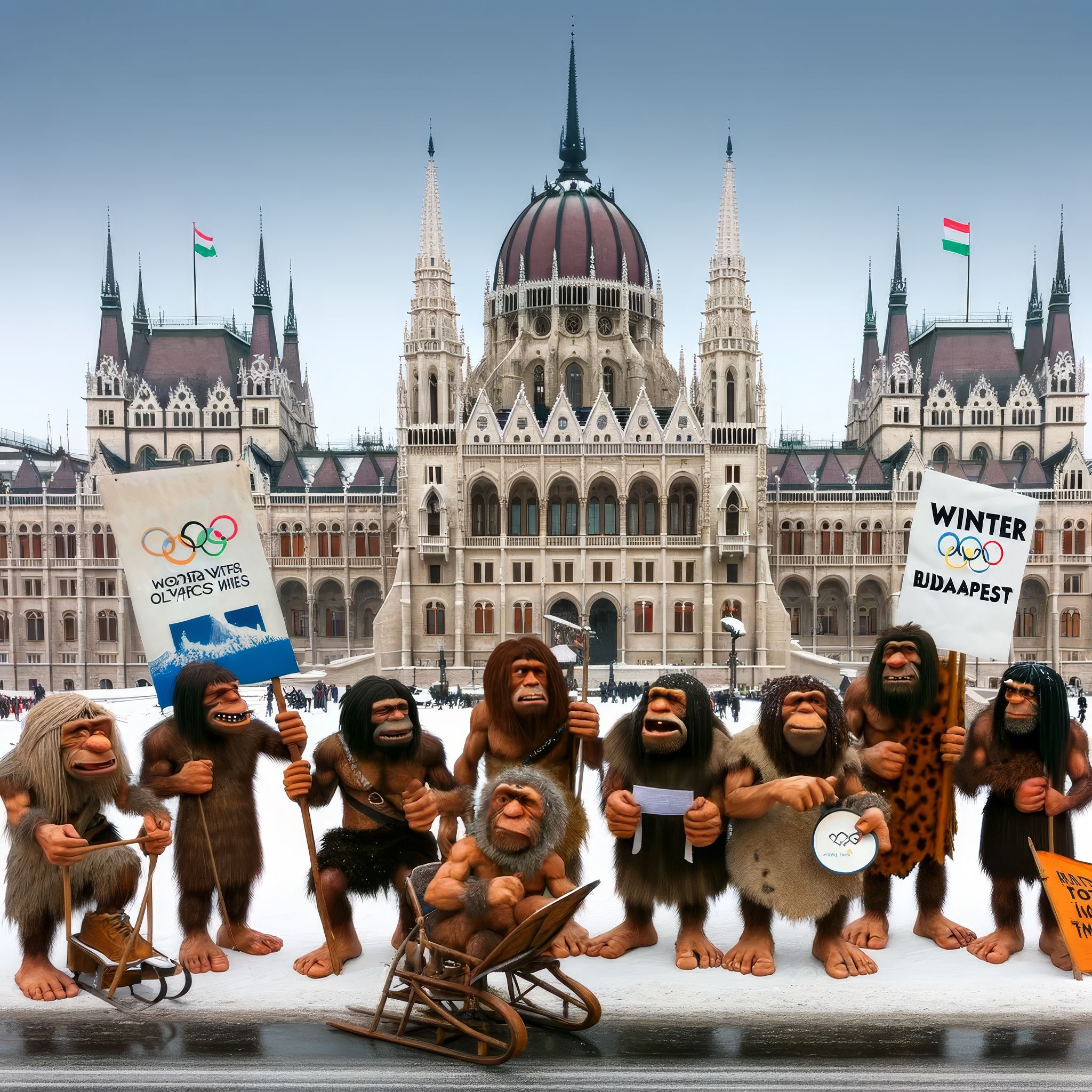
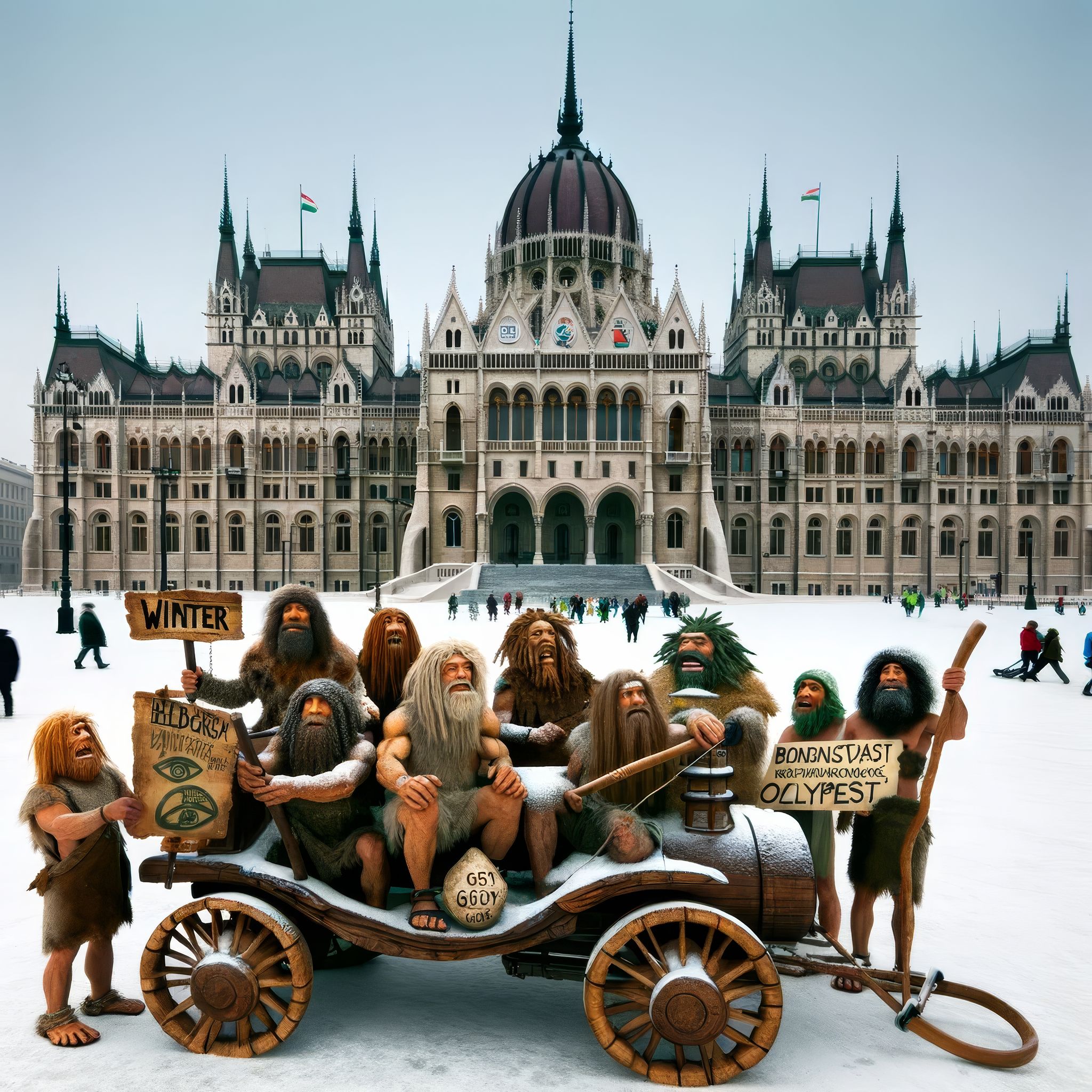
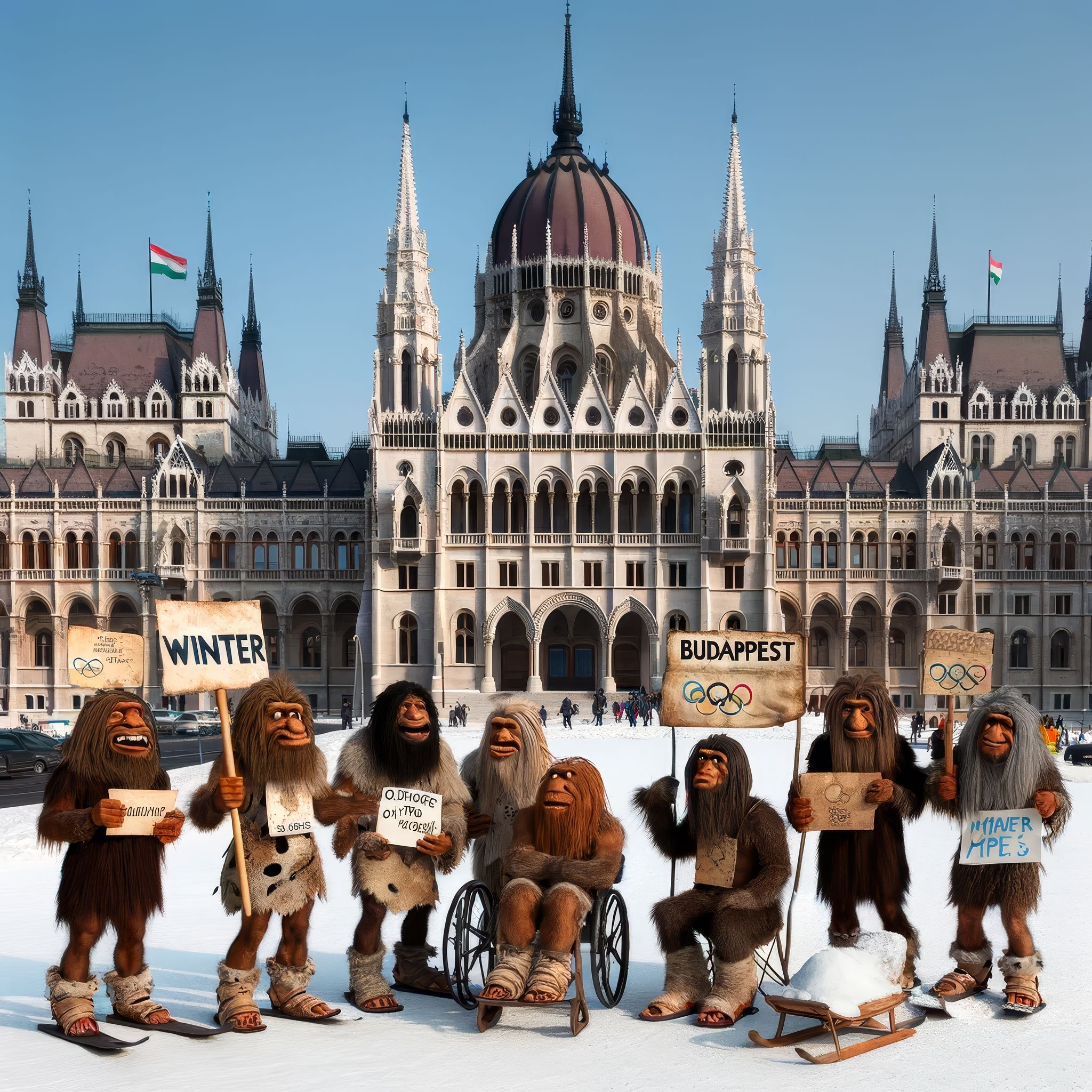
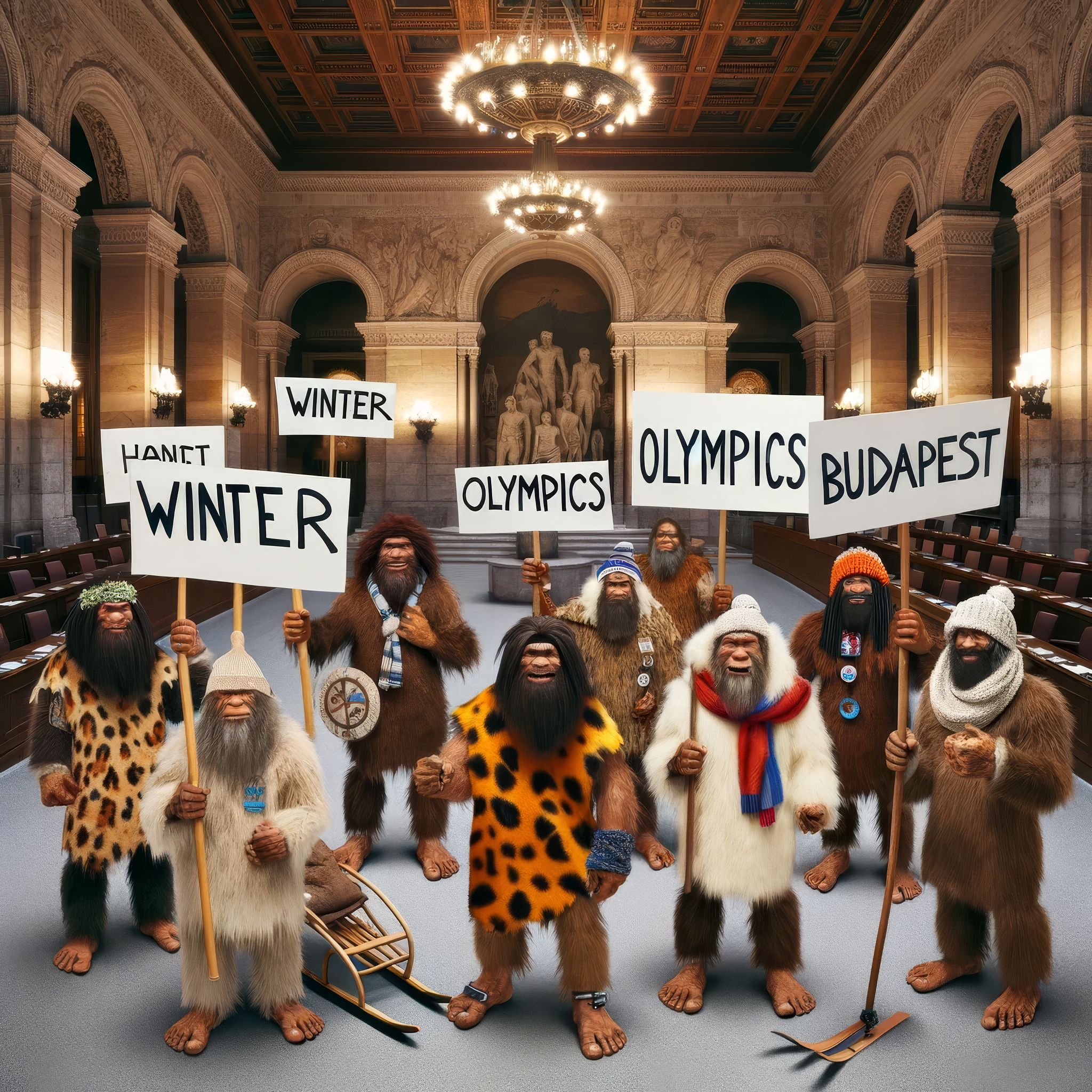
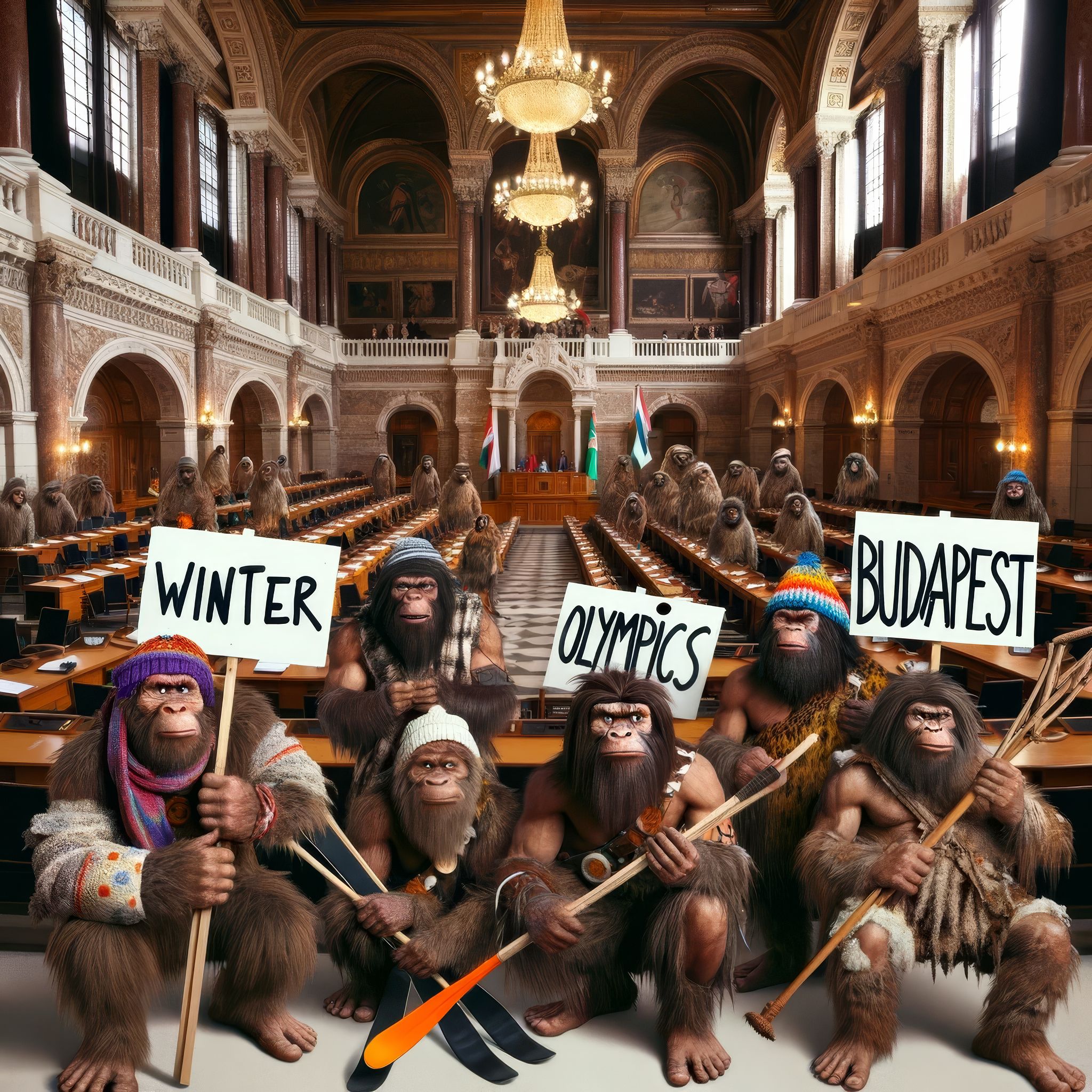
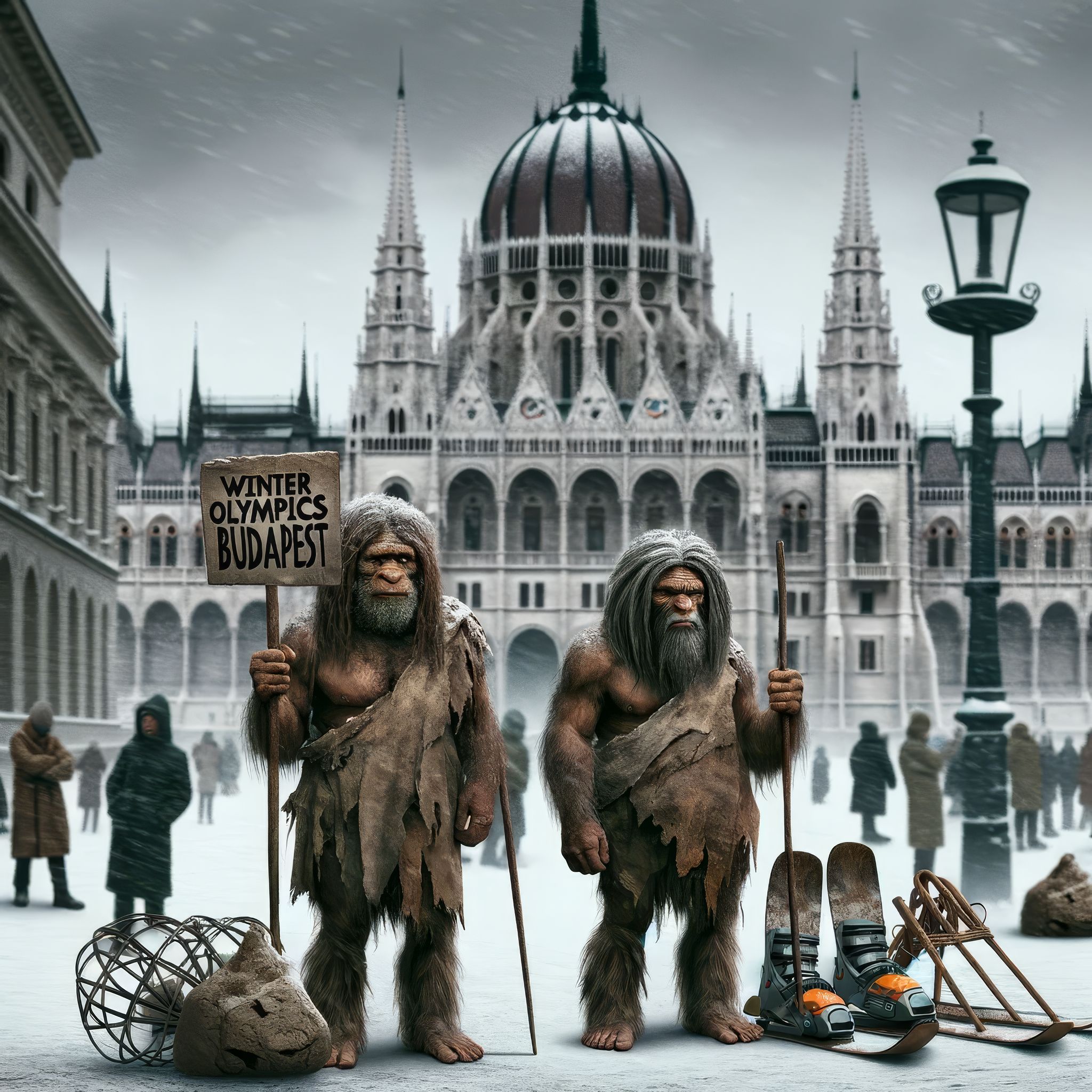
Budapest, Hungary – In a city known for its vibrant history and breathtaking architecture, a unique protest captured the hearts of Budapest and the world. Neanderthal cavemen, in a whimsical display of creativity and hope, gathered outside the iconic Hungarian Parliament Building. Dressed in winter accessories and holding signs for “Winter,” “Olympics,” and “Budapest,” they advocated for the city’s bid to host the Winter Olympics, bringing an imaginative twist to public demonstrations.
The cavemen, some equipped with modern ski equipment and sledges, stood against the backdrop of the Parliament’s gothic splendor, under a bright winter sky. This light-hearted protest drew smiles and support from onlookers, symbolizing a city united by its Olympic dreams. The scene was a testament to Budapest’s enthusiasm and readiness to host the global event, highlighting the community’s creative spirit and dedication.
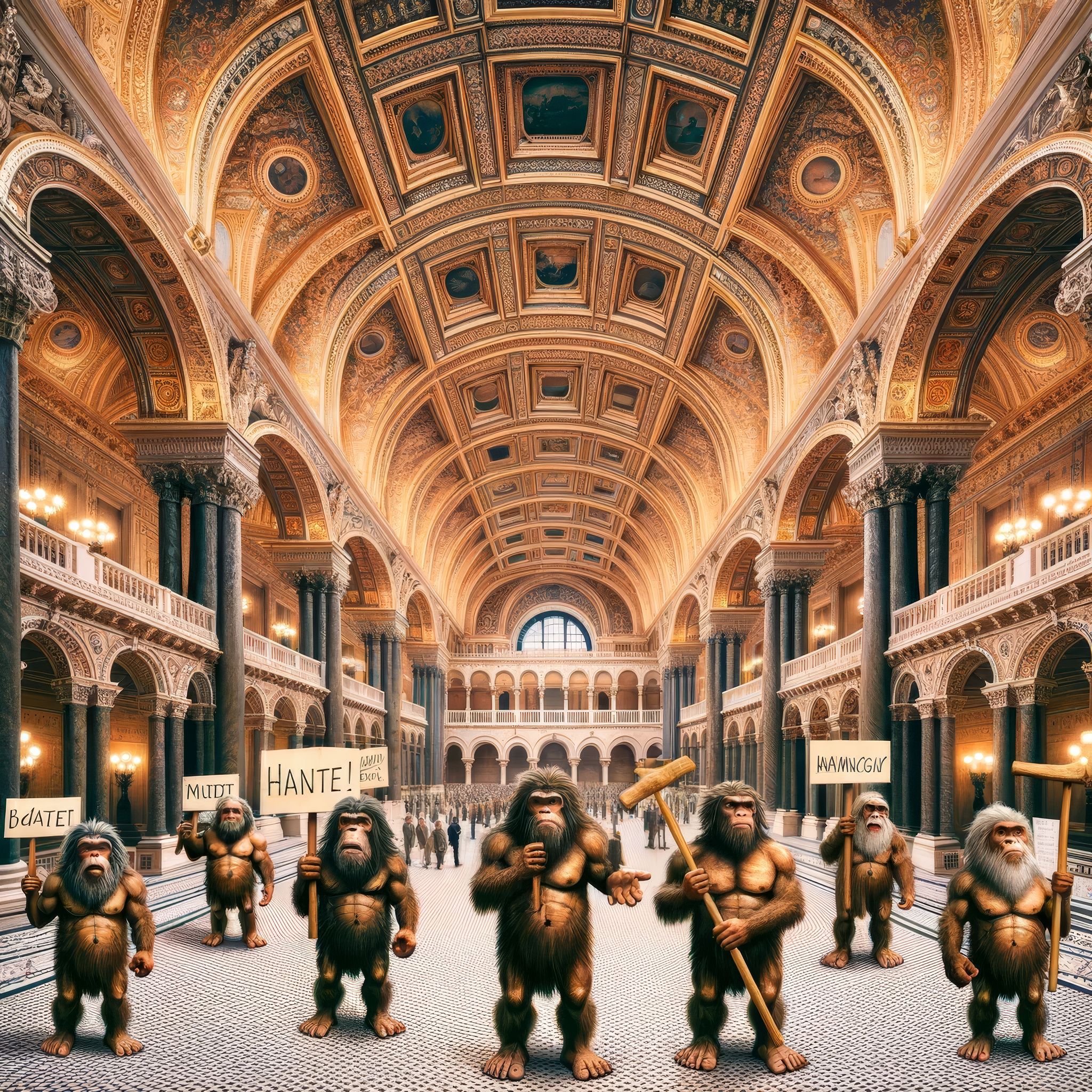
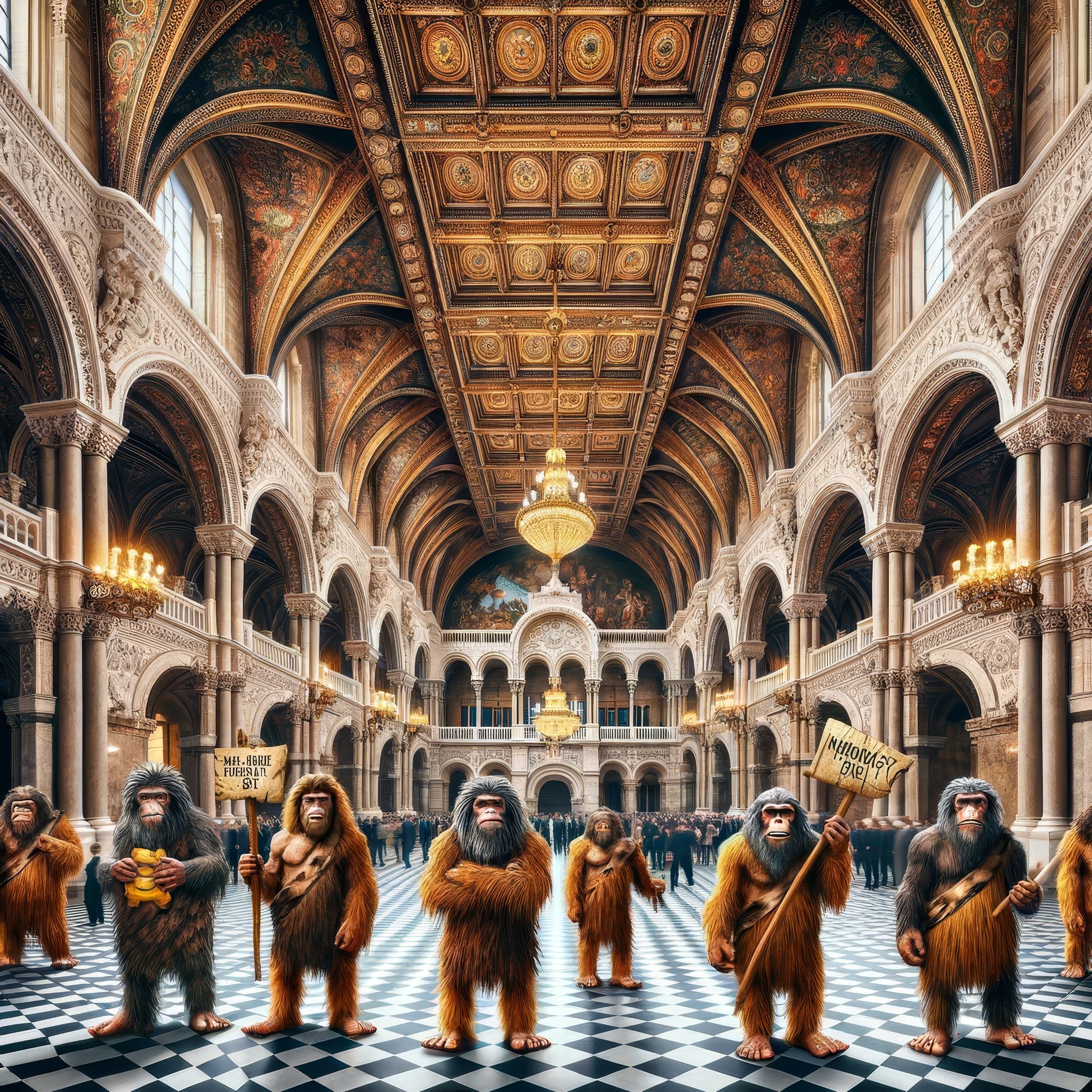
However, the hopeful atmosphere took a somber turn following an official statement from the Parliament: “No Neanderthal migrants in Hungary.” This response, stark and unwelcoming, cast a shadow over the previously cheerful demonstration. The cavemen, once symbols of Budapest’s Olympic aspirations, now stood as poignant reminders of rejection and exclusion. The change in tone was palpable, as the once vibrant protest scene outside the Parliament turned melancholic.
The stark contrast between the initial joy and the subsequent disappointment has sparked a wider conversation on acceptance and the power of imaginative protest. As Budapest grapples with this turn of events, the spirit of the Olympics — bringing diverse communities together — feels more relevant than ever.
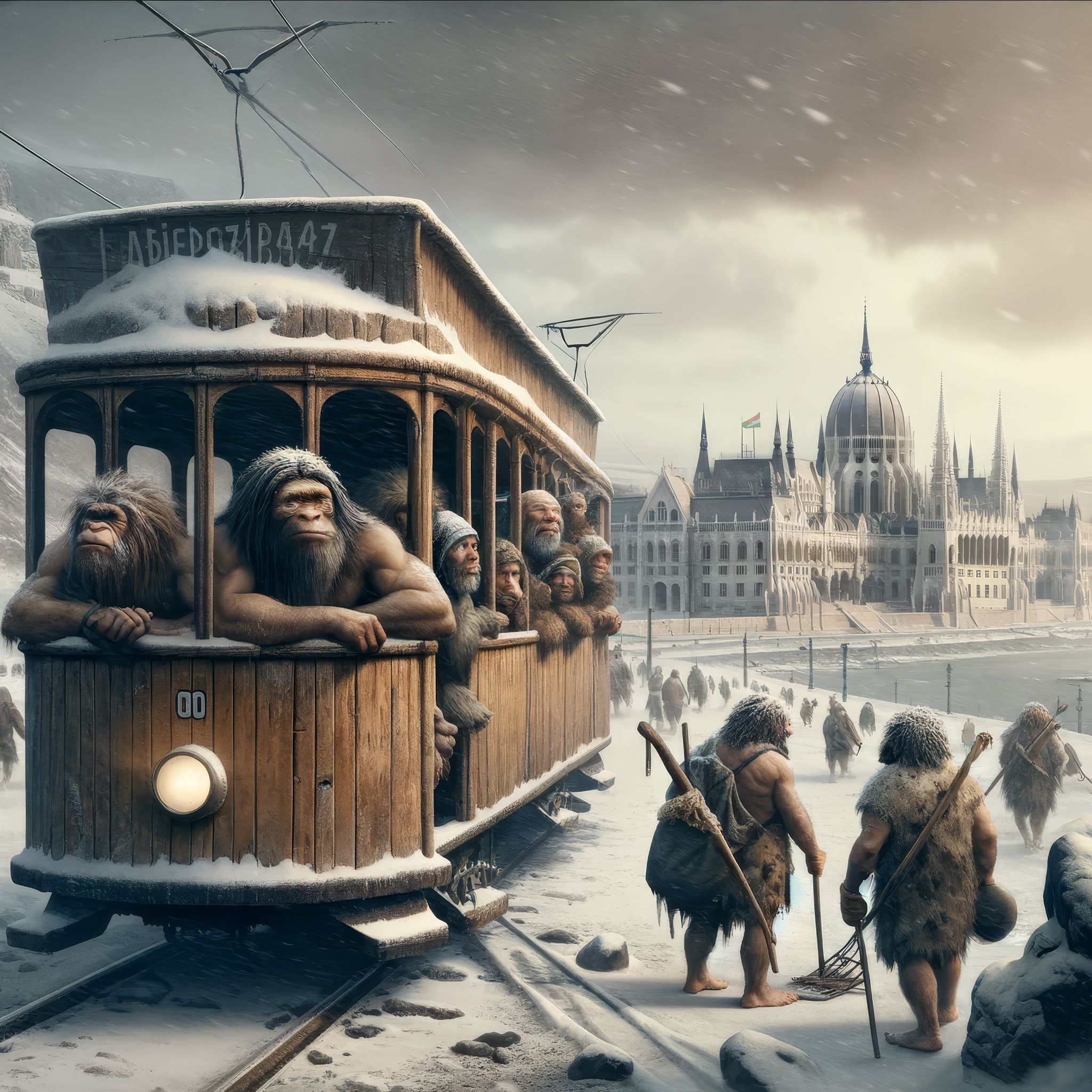
This tale of hope and disappointment is not just about an Olympic bid but a reflection on society’s response to those who dare to dream differently. As the cavemen silently ride their wooden tram back to seclusion, their journey remains a powerful narrative of what it means to aspire, advocate, and face rejection in the modern world.