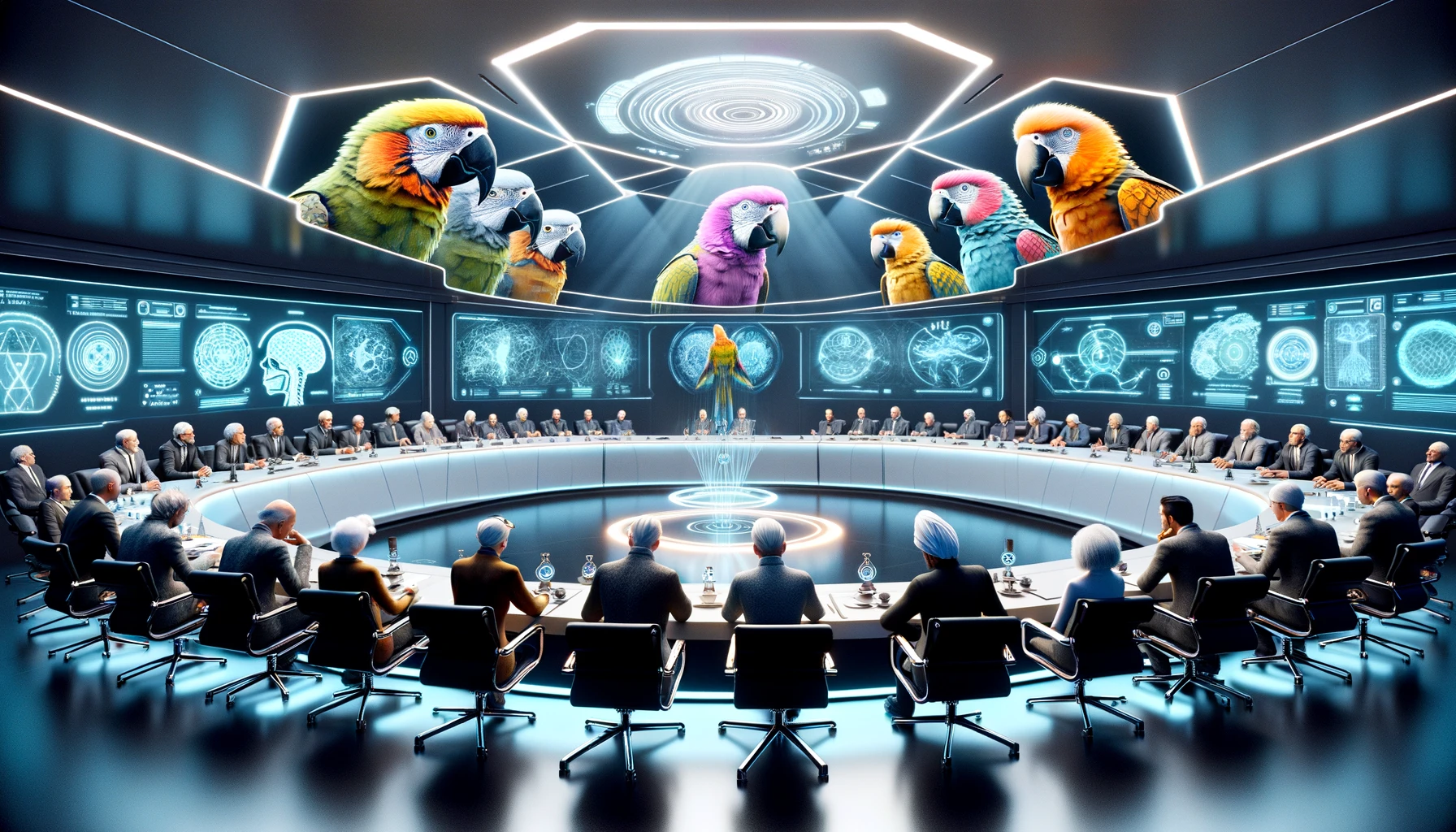
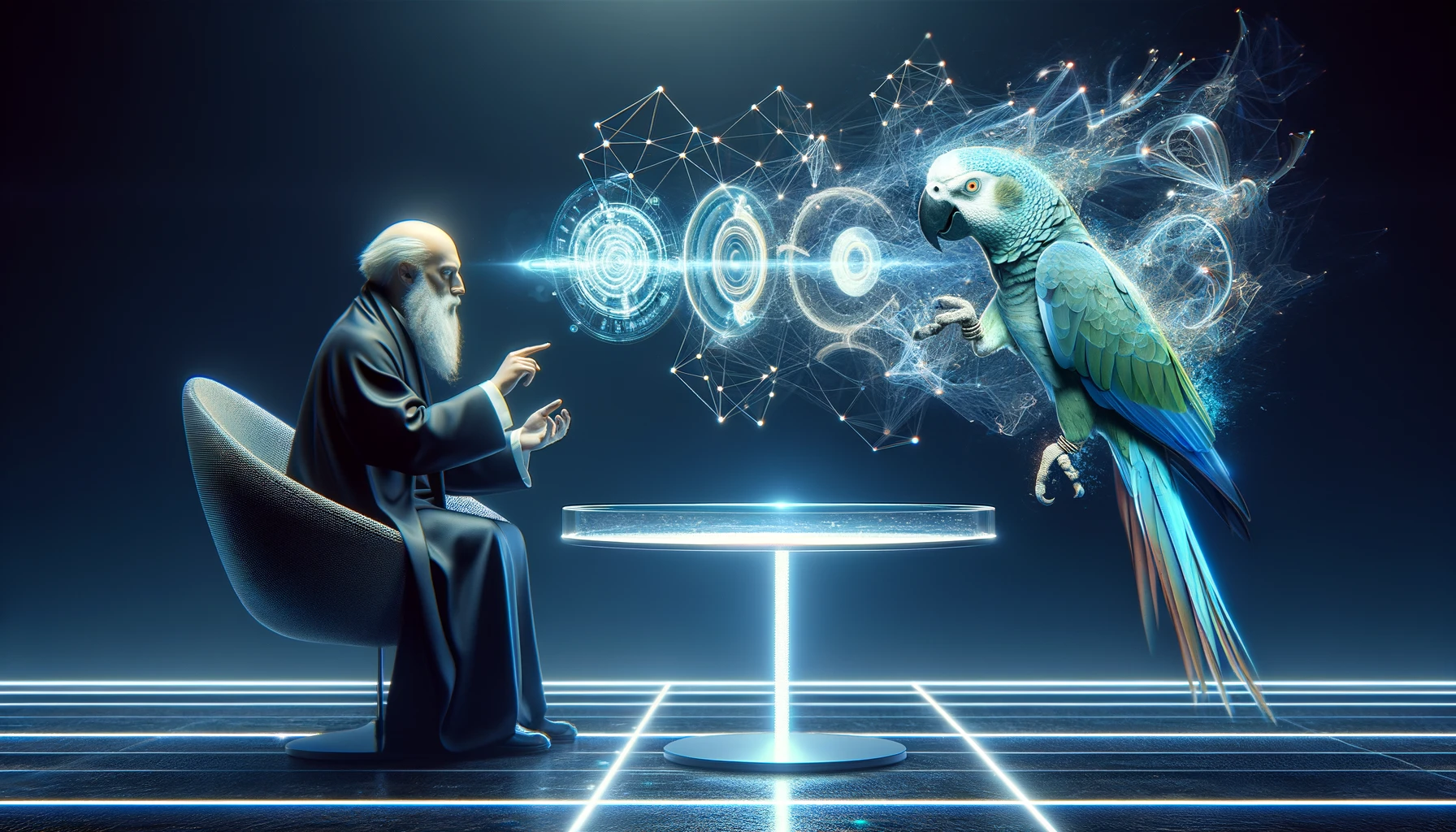
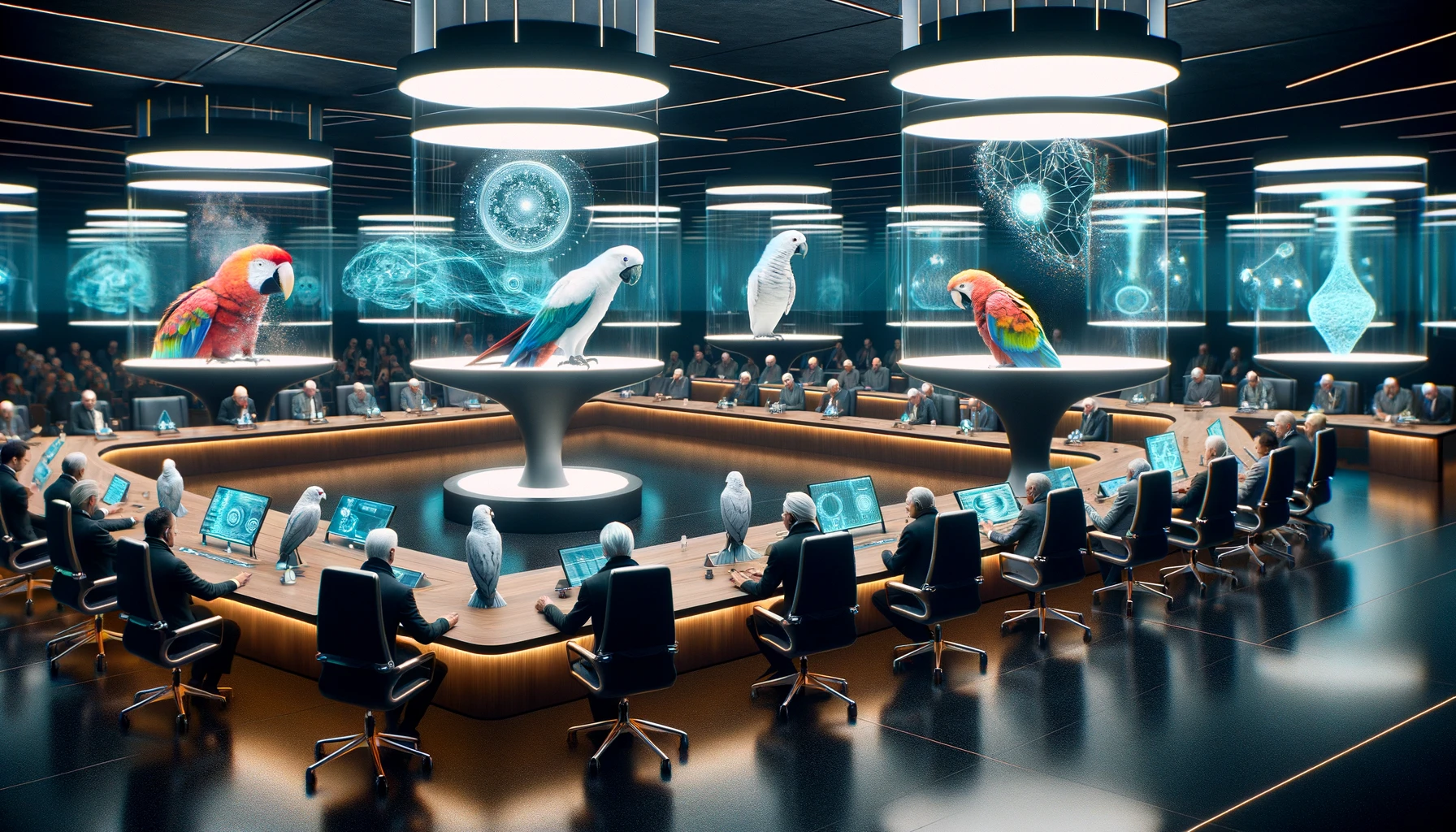



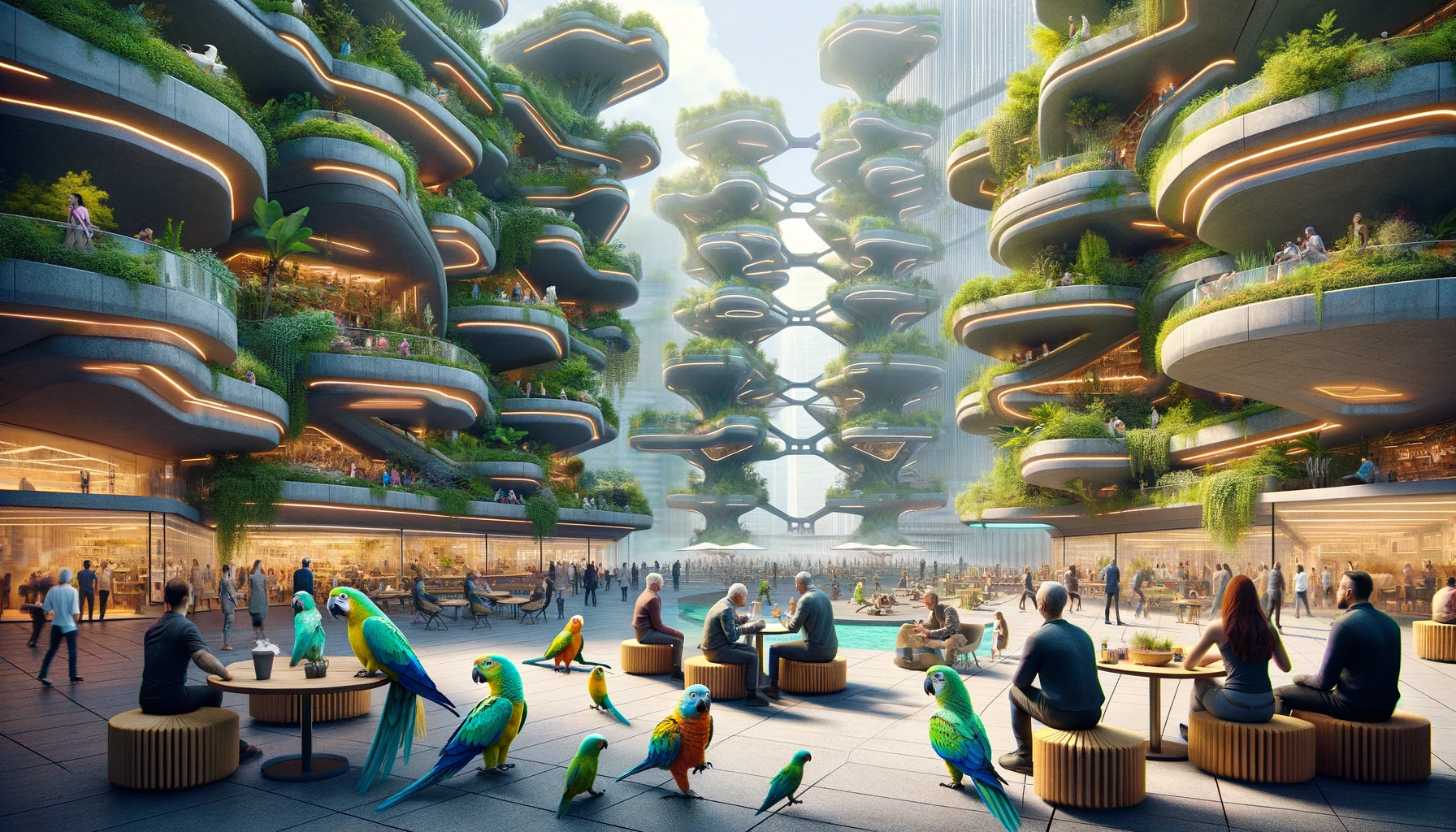

In 2045, a groundbreaking event known as The Great Debate took the world by storm, pitting some of the era’s most distinguished philosophers against an unexpected group of challengers: parrots. This unprecedented confrontation not only challenged the boundaries of intellectual discourse but also redefined humanity’s understanding of intelligence and communication.
The debate, held at the newly established Global Forum for Advanced Thought in Geneva, Switzerland, sought to address one of the most profound questions of the 21st century: “What constitutes the essence of meaningful communication?” The philosophers, a diverse group of thinkers from around the globe, approached the debate with centuries of human thought backing their arguments. They prepared to showcase the depth and complexity of human philosophy, ranging from the Socratic method of inquiry to the existential musings of modern thinkers.
On the opposing side, the parrots were not just any ordinary birds but were the product of advanced genetic engineering and neural enhancement technologies. These parrots possessed the ability to understand and process human language at an unprecedented level, capable of formulating responses that reflected not just mimicry but apparent understanding and, some argued, genuine insight.
As the debate commenced, spectators were initially amused but soon found themselves engrossed in a genuinely philosophical discourse. The philosophers presented their views on language as a tool for expressing the human condition, weaving through topics like consciousness, free will, and the nature of reality. They argued that human language, with its nuances and capacity for abstract thought, was unparalleled.
However, the parrots, through their responses, challenged these notions. They articulated (in as much as their abilities allowed) perspectives on existence, happiness, and even morality that mirrored philosophical arguments but were derived from their unique experiences as non-human sentient beings. Their contributions to the debate were not mere repetitions but thoughtful, often questioning the philosophers’ assertions in ways that prompted introspection and surprise.
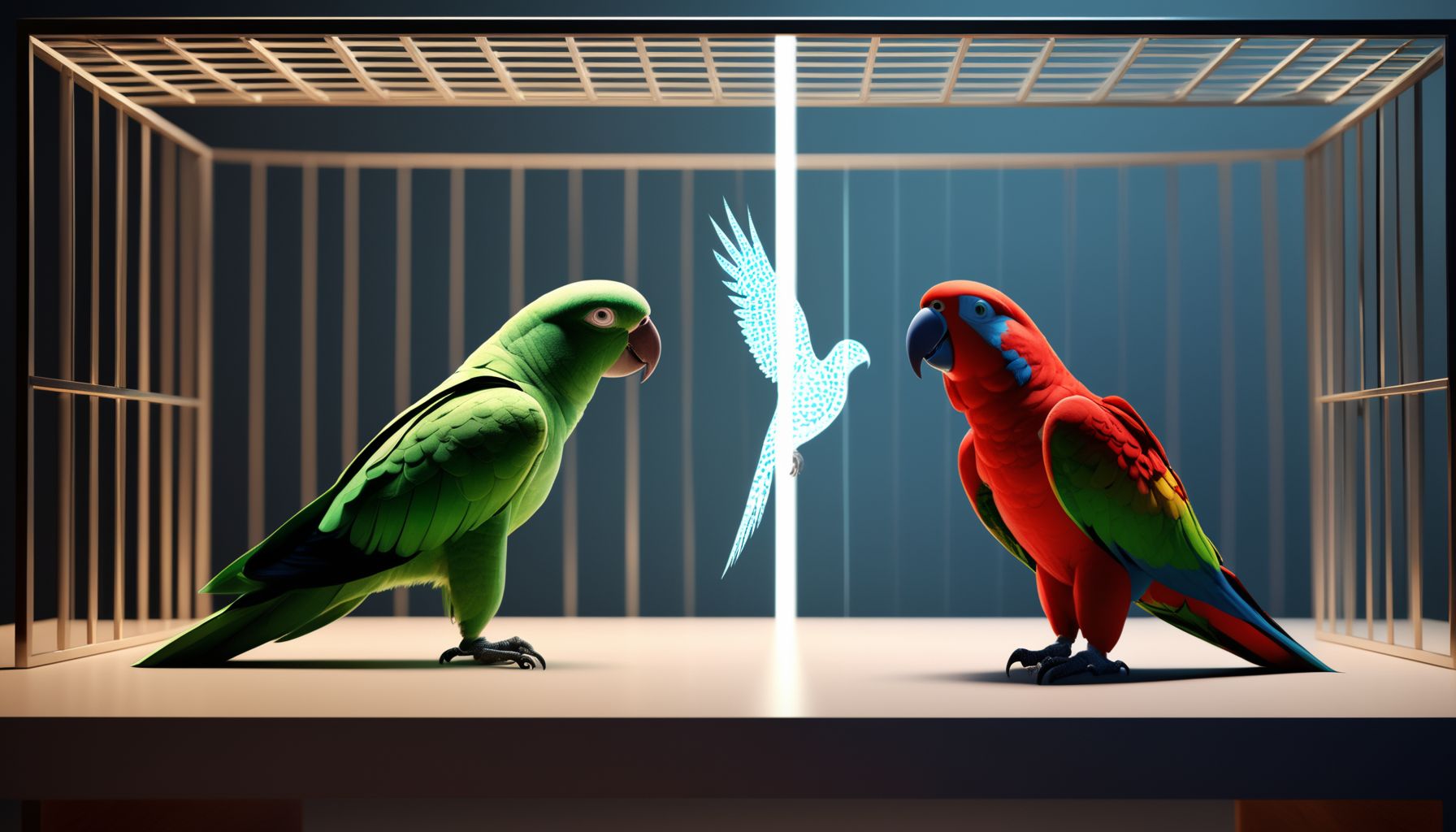
The turning point of the debate came when a philosopher posed a question about the nature of freedom, to which a parrot responded with a poignant remark on the experience of flight and the confines of a cage, metaphorically challenging the human concept of freedom and autonomy. This moment underscored the debate’s core theme: meaningful communication transcends species, relying not on the form but on the capacity to share and understand experiences and ideas.
The Great Debate of 2045 did not end with a clear victor. Instead, it opened new avenues of philosophical inquiry and discussions about intelligence, consciousness, and the rights of enhanced or artificial beings. It prompted a reevaluation of the anthropocentric view of communication and intelligence, highlighting the potential for meaningful interactions beyond the human sphere.
In the aftermath, the debate was hailed as a landmark moment in the ongoing dialogue between technology, philosophy, and the natural world. It underscored the importance of expanding our understanding of communication and intelligence to include non-human perspectives, challenging long-held assumptions about the uniqueness of human thought and the potential for interspecies understanding.
The philosophers and parrots, in their unique confrontation, offered a glimpse into a future where the boundaries between human and non-human intelligence are not just blurred but are interwoven, creating a tapestry of thought and understanding richer and more diverse than ever before. The Great Debate became a symbol of hope and a testament to the unexplored depths of minds, both human and avian, setting the stage for a future where dialogue spans the breadth of sentient existence.
Sign up for our newsletter to see new articles.

Subscribe to my weekly newsletter. I don’t send any spam email ever!