


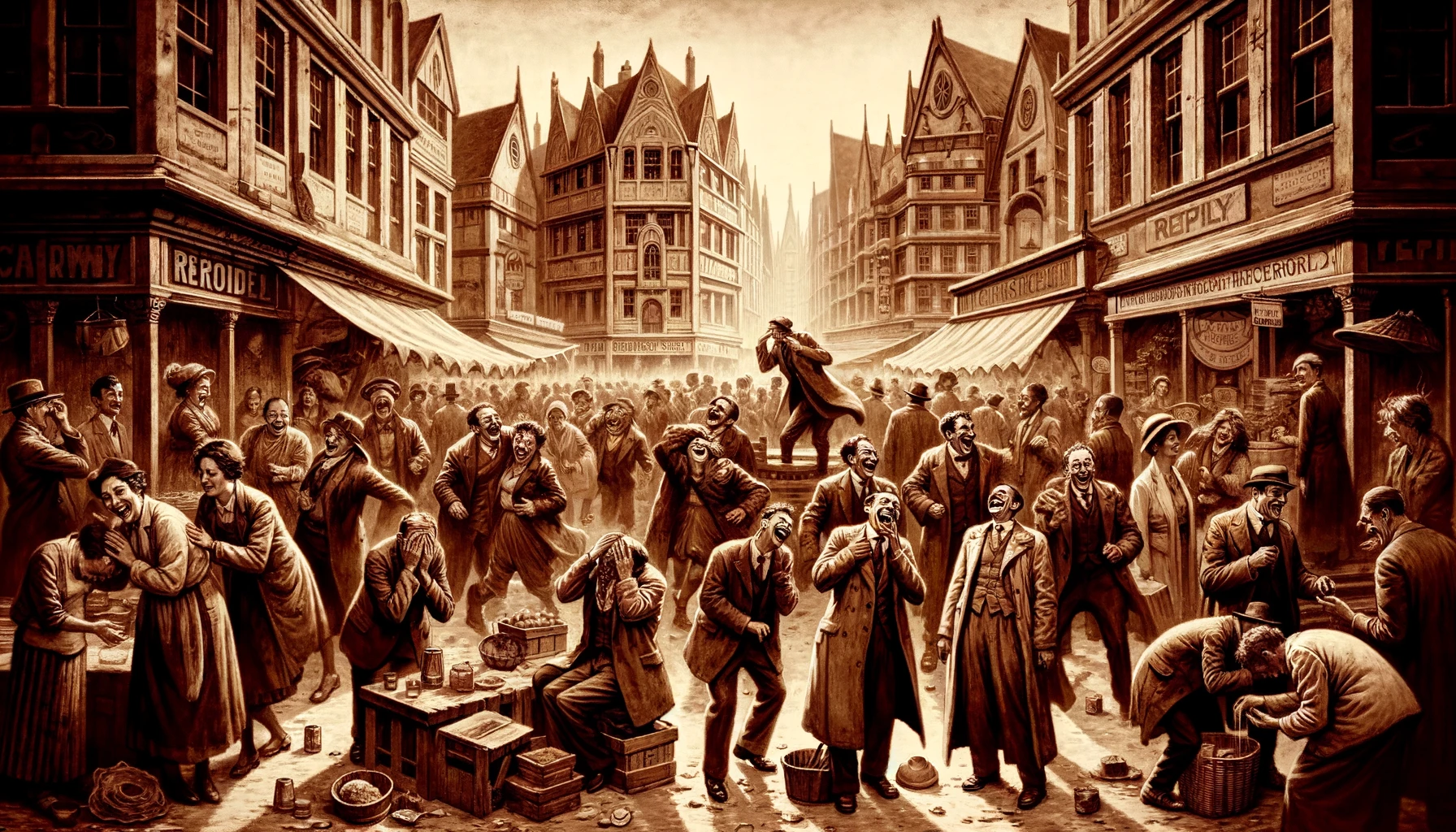


In the annals of history, few events are as peculiar and intriguing as the Unexplained Worldwide Laughter Epidemic of 1925-1926. This phenomenon swept across the globe, infecting communities with uncontrollable bouts of laughter, leaving scientists, historians, and psychologists baffled for nearly a century.
The epidemic seemingly began without warning, first documented in a small village in Europe before spreading to various parts of the world. Reports described groups of people suddenly overtaken by laughter, unable to stop for hours, and in some cases, days. The laughter was not joyful but appeared to be a physical compulsion, leaving many exhausted, dehydrated, and in a state of confusion.
As the phenomenon spread, it captured the attention of the global media, which reported outbreaks in locations as diverse as a market square in India, a school in Japan, and a factory in the United States. Despite the widespread nature of the event, medical experts were unable to pinpoint a cause. Various theories were proposed, from mass hysteria triggered by the socio-economic pressures of the post-World War I era to a viral infection affecting the nervous system, yet none could fully explain the bizarre outbreaks.
The epidemic also prompted a flurry of academic interest, with scholars from various disciplines attempting to understand its implications on human behavior and society. Psychologists considered it a mass psychogenic illness, highlighting the power of the mind over the body, while sociologists viewed it as a manifestation of collective stress.
Interestingly, the laughter epidemic also had unintended consequences, fostering a sense of unity and shared experience among affected communities. Despite the confusion and concern, the phenomenon brought people together, with many recounting their experiences in laughter clubs and community gatherings that formed in the epidemic’s aftermath.
By the end of 1926, the laughter epidemic had mysteriously faded as quickly as it had appeared. Left in its wake were countless questions and the legacy of one of the most curious episodes in modern history. The Unexplained Worldwide Laughter Epidemic of 1925-1926 remains a topic of fascination, a reminder of the mysteries that still elude scientific explanation and the extraordinary ways in which human beings are connected.




Sign up for our newsletter to see new articles.

Subscribe to my weekly newsletter. I don’t send any spam email ever!